The European Union is increasingly accepting the idea of speaking directly with Russia to bring the full-scale invasion of Ukraine to an end.
The internal reassessment intensified after Ukrainian President Volodymyr Zelenskyy, frustrated by the White House’s all-consuming focus on the Middle East, publicly urged Europeans to appoint a designated envoy for the peace negotiations.
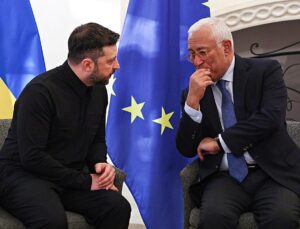
“It is important for it to have a strong voice and presence in this process, and it is worth determining who will represent Europe specifically,” Zelenskyy said on Sunday after speaking with António Costa, the president of the European Council.
But whoever gets the job might come to regret having ever applied.
Breaking the diplomatic isolation imposed in February 2022 comes with formidable risks for Europeans, who, on the one hand, want to have their own seat at the table to shape the future of the continent’s security architecture but, on the other, are deeply wary of falling into the Kremlin’s trap and making a fool of themselves.
The fact that Russian President Vladimir Putin, the likeliest person to be on the other end of the line, remains fixated on securing the surrender of the entire Donbas — a non-starter for Ukraine — and on gaining international recognition of the illegally occupied territories, further complicates the calculations.
The near-daily barrage of drones and missiles that Moscow fires against Ukrainian citizens, and the sheer destruction they leave behind, further deepens these concerns.
Some member states, like Germany, the Netherlands, the Nordics and the Baltics, prefer to bide their time and tighten the screws on the Russian economy, which is showing growing signs of strain after four years under ever-expanding sanctions.
The economic squeeze, their thinking goes, will eventually weaken Russia’s negotiating hand and create an opening for a compromise that is not yet on the table. Otherwise, the special envoy risks coming back empty-handed and humiliated.
“Do you see any willingness on the Russian side to engage in serious negotiations? I don’t, my government doesn’t,” a senior diplomat said. “If the Russians are ready to seriously engage – and that’s a big if – then obviously the EU will play its part.”
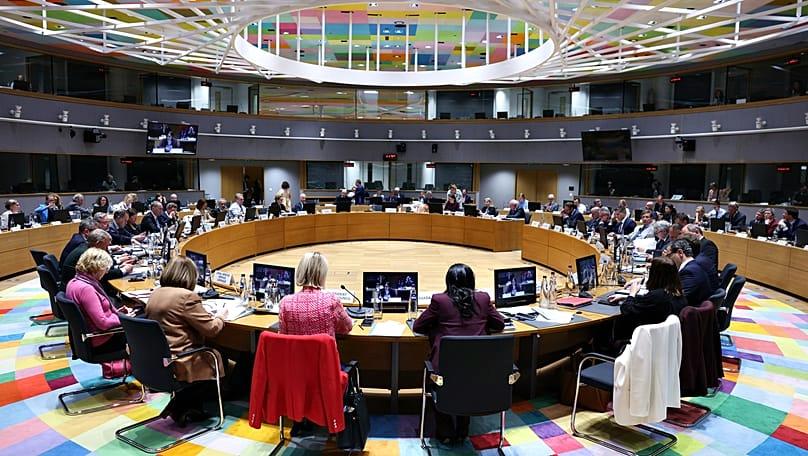
EU foreign ministers in Brussels.
Europeans are also mindful of the experience of the US-brokered talks, which have not resulted in any material progress beyond prisoner swaps, and are loath to see their envoy caught in the same fruitless cycle. Often, they have been outraged by the ease with which the US delegation, led by Steve Witfokoff, has echoed Russian talking points and the intense pressure put on Zelenskyy to cede territory still under Ukrainian control.
The failed Minsk agreements, signed under the auspices of Germany and France to end the Donbas war, are seen as another blueprint to avoid at all costs.
This is why officials and diplomats in Brussels insist the bloc anchor its negotiating position in a set of agreed-upon principles, rules and red lines that would prevent a fragmented set of voices and strengthen, rather than undercut, Ukraine’s interests.
“We cannot give in from the start,” another diplomat said. “The way this war ends will have implications for the whole of Europe.”
High Representative Kaja Kallas, who previously warned the bloc should not “humiliate” itself by seeking direct talks, has been working with foreign ministers to bridge the vastly disparate views among member states to draw up a list of concessions and conditions that Europeans expect Russia to fulfil.
Though the draft list has been described as overtly ambitious and unrealistic, it could set the basis for a broader framework for the 27 leaders to endorse at their next summit on 18-19 June. The framework would then guide the envoy’s work.
“Before we talk to the Russians, we should agree and talk amongst ourselves what we want to talk to the Russians about,” Kallas said.
A ‘workable’ format
If the split between capitals and Moscow’s maximalism were not daunting enough, the envoy is set to face an uphill struggle in getting on Washington’s good side.
Since President Donald Trump blindsided allies by unilaterally launching negotiations with Putin, Europeans have largely been excluded from the process. Last year, they found, through press reports, a 28-point plan drafted by US and Russian officials that included issues, such as sanctions and assets, that fell under European jurisdiction.
As of today, there is no guarantee that the Americans will acknowledge the legitimacy of a special EU envoy and integrate them into the highly confidential deliberations.
Zelenskyy himself has recognised the challenge, telling leaders they need to find a “workable diplomatic format” that takes the American “views” into account. His foreign minister, Andrii Sybiha, later said the EU should not pursue “alternative peace talks” but rather play a “complementary” role in the existing process.
The US holds a unique position between the two warring parties: it has the world’s largest economy, a mighty army and a permanent seat at the UN Security Council. Crucially, the US, under Trump, has cut all financial and military aid to Ukraine and eased sanctions on Russian oil, reinforcing the perception of an equidistant mediator.
The EU, by contrast, has doubled down on support: it recently approved a €90 billion loan for Ukraine and its 20th package of sanctions against Russia.
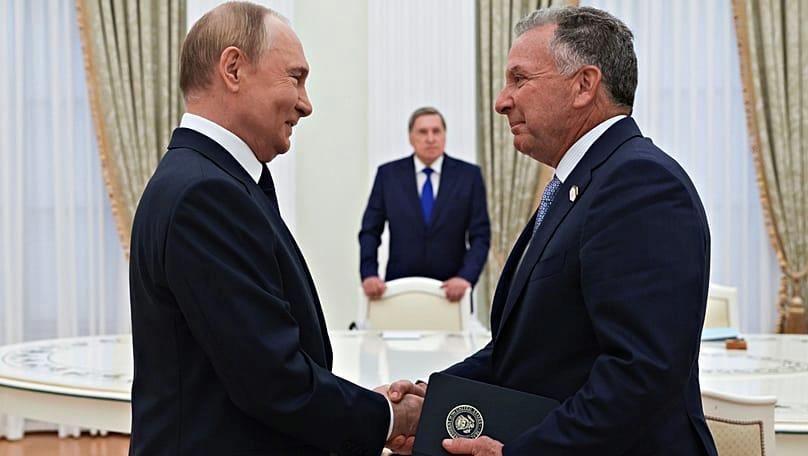
Vladimir Putin and Steve Witkoff.
Moscow has seized on those facts to dismiss any EU overture. Therefore, a snub from both the Russian and American sides cannot be ruled out.
“It’s obvious that Europeans do not want to, nor can they, become mediators. Furthermore, they are now effectively direct participants in the war on Kyiv’s side,” the Kremlin’s spokesperson, Dmitri Peskov, said last week.
Instead, Moscow has taunted Europeans by proposing Gerhard Schröder, the former German chancellor, as envoy for direct talks. Schröder cultivated warm relations with Putin while in office and later lobbied on behalf of Russian companies, which, as Kallas quipped, would mean “he would effectively be sitting on both sides of the table”.
The Schröder pitch was quickly shot down, but many in Brussels saw it as a stark reminder of the Kremlin’s playbook and a warning against making rash decisions.
Europeans have also played into the joke by floating names such as Angela Merkel, the former German chancellor, who was part of the Minsk agreements, and Mario Draghi, the former Italian prime minister, who is pitched for virtually every special EU job.
To insulate itself, the EU needs “clarity” and “consensus” on the message it wants its envoy to convey, says Jana Kobzova, a senior fellow at the European Council for Foreign Relations (ECFR), who believes direct talks should not happen “for the sake of talks”.
“The obvious risk is that the Kremlin will play the Europeans and instead of using the potential contacts for a constructive engagement, it will use them to split Europe and create more divisions, by picking and choosing whom Moscow engages and whom it ignores,” Kobzova told Euronews.
“How to avoid the traps? Easily: don’t make it look like Europe is desperate to talk to Russia. The Russian leadership also needs to feel that such contacts are needed.”


 News
News
 Dünya
Dünya
 Dünya
Dünya
 Dünya
Dünya
 Dünya
Dünya
 Dünya
Dünya
 Dünya
Dünya
 DÜNYA
DÜNYA