European nations and Japan have said they are ready to support efforts to improve security in the Strait of Hormuz, as the war with Iran continues to disrupt shipping without a concrete military role being outlined.
In a joint statement, countries including Britain, France, Germany, Italy, the Netherlands and Japan condemned attacks on commercial vessels and said they were prepared to help ensure safe passage through the waterway and support stability in global energy markets.
At the same time, maritime data shows the strait has not been completely shut. Around 90 ships, including oil tankers, crossed the waterway in the first two weeks of March. That is far below normal levels, but indicates that limited traffic is continuing.
Analysts say the strait is now operating on a selective basis, with some vessels allowed through while others face higher risks.
Disruption and attacks at sea
The crisis began on 28 February when the United States and Israel launched strikes on Iran, raising immediate concerns about the safety of shipping routes in the Gulf.
Within days, tankers were damaged in attacks and shipping companies began delaying voyages as risks increased.
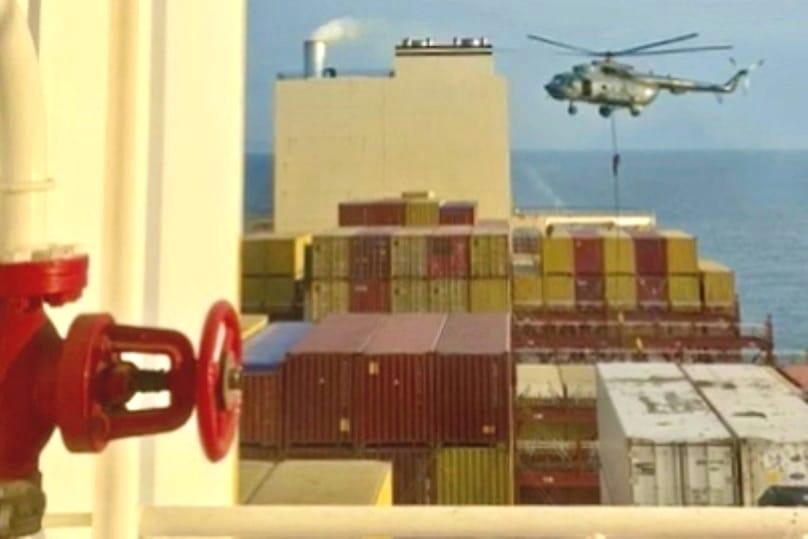
A helicopter raid targets a vessel near the Strait of Hormuz in April 2024.
A Malta-flagged container ship was hit by a projectile while passing through the strait, forcing its crew to abandon the vessel.
Shipping data showed dozens of vessels slowing or waiting in Gulf waters, while many others delayed movements as operators reassessed whether it was safe to transit the narrow passage.
At least 20 vessels have been attacked in the area since the start of the conflict.
Iran has warned it could target ships attempting to pass through the strait if attacks on its territory continue.
Selective crossings and energy impact
Despite the disruption, some ships have continued to get through, often under specific conditions.
Vessels linked to Iran or from countries that maintain ties with Tehran have been among those able to transit, while others have relied on diplomatic arrangements to pass safely.
Iran has continued exporting oil during the conflict, with trade data suggesting millions of barrels have still been shipped despite the slowdown in traffic.
The disruption has fed into global energy markets, with oil prices rising sharply and shipping rates increasing as insurers and operators factor in the risks of sailing through the strait.
The Strait of Hormuz is one of the world’s most important energy routes, carrying around a fifth of global oil supply and key liquefied natural gas exports from the Gulf.


 News
News
 Dünya
Dünya
 Dünya
Dünya
 Dünya
Dünya
 Dünya
Dünya
 Dünya
Dünya
 Dünya
Dünya