Just hours after talks collapsed in Islamabad, US President Donald Trump said the US Navy would “immediately” begin blockading the Strait of Hormuz, one of the world’s most critical shipping routes.
“I have instructed our Navy to seek and interdict every vessel in International Waters that has paid a toll to Iran,” Trump said in a Truth Social post. “No one who pays an illegal toll will have safe passage.”
He also signaled the U.S. is prepared to escalate further if needed, saying Washington is ready to act at the “appropriate moment,” while again pointing to Iran’s nuclear ambitions as the core issue.
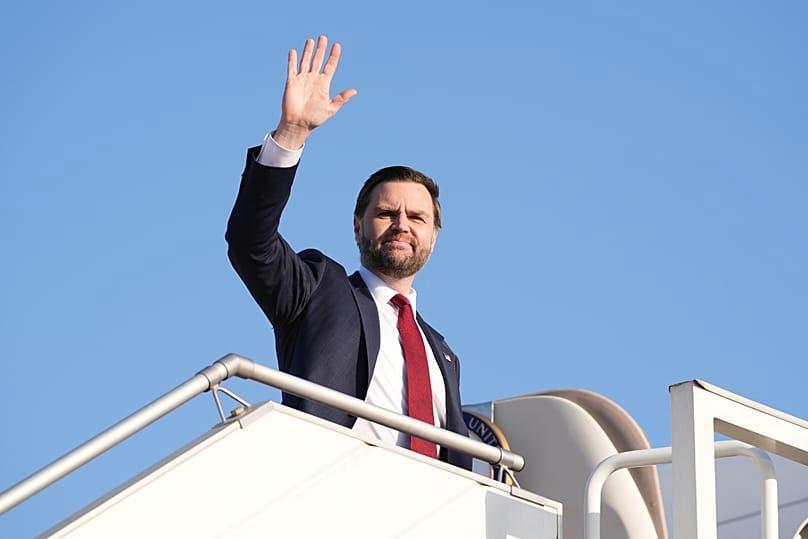
Vice President JD Vance waves as he boards Air Force Two after attending talks on Iran in Islamabad, Pakistan, Sunday, April 12, 2026.
With the world watching, there was no breakthrough moment in Islamabad. But despite no deal, there was no breakdown either.
After 21 hours of high-level negotiations, the United States and Iran walked away empty-handed. Officials on all sides moved quickly to frame the narrative and signal what comes next.
US Vice President JD Vance framed the outcome as a failure on Iran’s part to meet clear conditions.
“The bad news is that we have not reached an agreement,” he said. “We’ve made very clear what our red lines are and they have chosen not to accept our terms.”
For Washington, the core issue remains unchanged: a long-term guarantee that Iran will not pursue nuclear weapons.
“We need to see an affirmative commitment that they will not seek a nuclear weapon. We haven’t seen that yet.”
Vance said the U.S. has already put forward its “final and best offer,” leaving Tehran to decide whether to accept it. Iran’s public response was more layered.
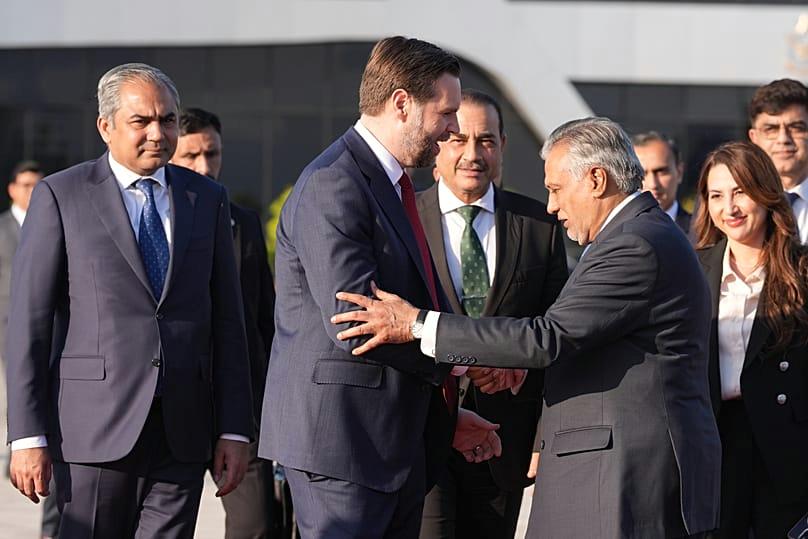
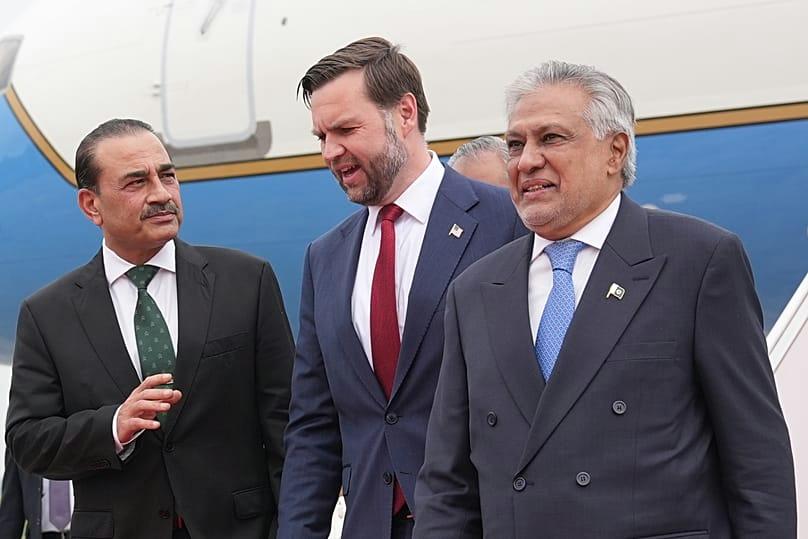
Vice President JD Vance shakes hands with Pakistani Foreign Minister Mohammad Ishaq Dar, as he prepares to board Air Force Two after attending talks on Iran in Islamabad.
Foreign ministry spokesman Esmail Baghaei acknowledged partial progress but pointed to unresolved gaps.
“On some issues we actually reached mutual understanding, but there was a gap over two or three important issues and ultimately the talks didn’t result in an agreement.”
He said the talks grew more complicated as new issues were introduced, including the Strait of Hormuz and broader regional dynamics.
But the sharper political message came from Mohammad Bagher Qalibaf, who led Iran’s negotiating effort.
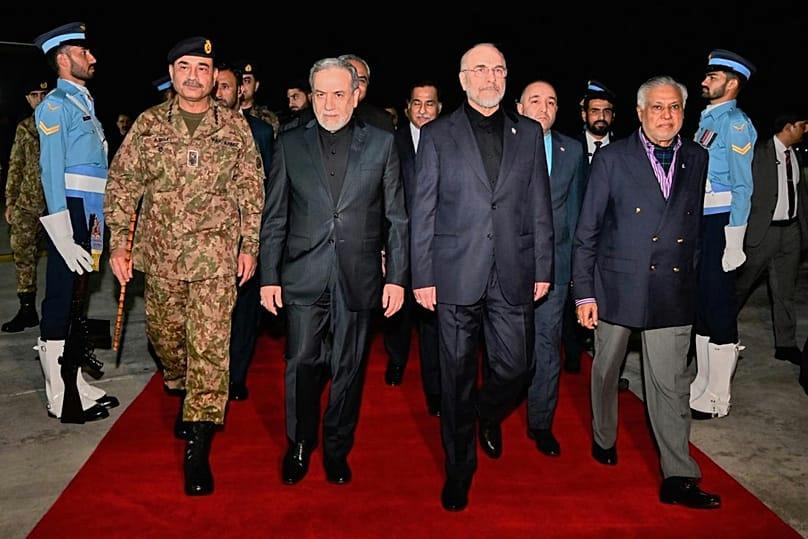
Iran’s Parliament Speaker Mohammad Bagher Qalibaf, center right, and Foreign Minister Abbas Araghchi are greeted by Pakistan Foreign Minister Ishaq Dar in Rawalpindi, Pakistan
In a series of posts on X, Qalibaf said Iran had come to the table with “good faith and will,” but blamed the United States for failing to build confidence.
“Now is the time for the U.S. to decide whether it can gain our trust or not.”
He did not go into detail, but Iranian state media pointed to familiar sticking points, including Tehran’s nuclear program and control over transit through the Strait of Hormuz.
The comments underscore a key dynamic. Iran is not just negotiating terms. It is questioning intent.
Pakistan Foreign Minister Mohammad Ishaq Dar, right, welcomes US Vice President JD Vance for talks with Iranian officials in Islamabad, Pakistan on Saturday, April 11, 2026.
Pakistan, which hosted the talks, urged both sides to continue engagement.
“It is imperative that the parties continue to uphold their commitment to ceasefire,” said Deputy Prime Minister and Foreign Minister Ishaq Dar.
“Pakistan will continue to facilitate engagement and dialogue in the days to come.”


 News
News
 Dünya
Dünya
 Dünya
Dünya
 Dünya
Dünya
 Dünya
Dünya
 Dünya
Dünya
 Dünya
Dünya